Dr. Amr Farahat, MD, PhD
Data Science Engineer & NeuroAI Researcher

Exploring the intersection of biological and artificial intelligence to decode the brain and develop responsible intelligent systems.

Dr. Amr Farahat

$ cat education.log

MSc — Integrative Neurosciences

2015 – 2018 · Otto von Guericke University, Magdeburg, Germany

Thesis: Deep Learning for EEG Decoding and Automatic Feature Discovery.

MD — Medical School

2007 – 2014 · Mansoura University, Mansoura, Egypt

$ cat experience.log

Data Science Engineer

2025 – present · Green Fusion, Berlin, Germany

PhD Researcher

2020 – 2025 · Ernst Strüngmann Institute for Neuroscience in Cooperation with Max Planck Society, Frankfurt, Germany

Predoctoral Researcher

2019 – 2020 · Max Planck Institute for Brain Research & Frankfurt Institute for Advanced Studies, Frankfurt, Germany

Neuroradiology Resident Doctor

2019 · Otto von Guericke University Hospital, Magdeburg, Germany

General Practitioner

2015 · Ministry of Health and Population, Ras Ghareb, Egypt

$ apt list --installed

Technical skills

  • Python
  • TensorFlow
  • Deep Learning
  • Computer Vision
  • MATLAB
  • Neural Data Analysis

Languages

  • Arabic (native)
  • English (TOEFL 109)
  • German (C1)

$ ls ./projects | head -n 5

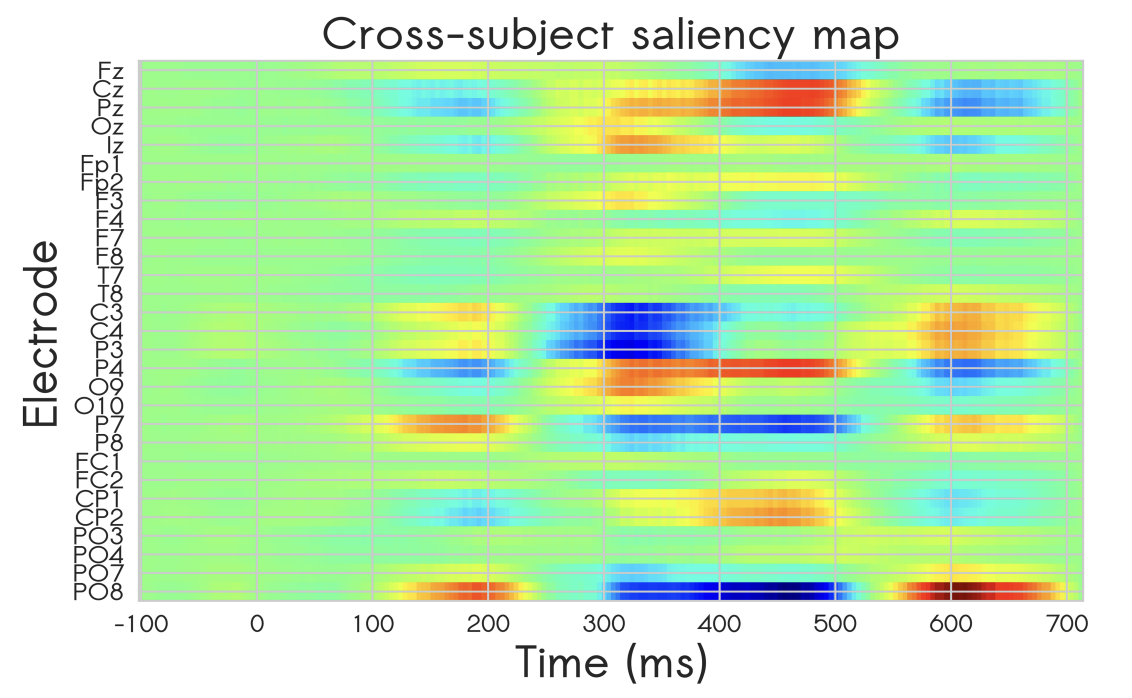
EEG decoding project figure

Deep Learning for EEG Decoding and Automatic Feature Discovery

Developed CNN models for classifying P300 ERP components in EEG data for a brain–computer interface (BCI) speller application. Used saliency maps to extract relevant spatial and temporal EEG features.

  • Python
  • TensorFlow
  • EEG
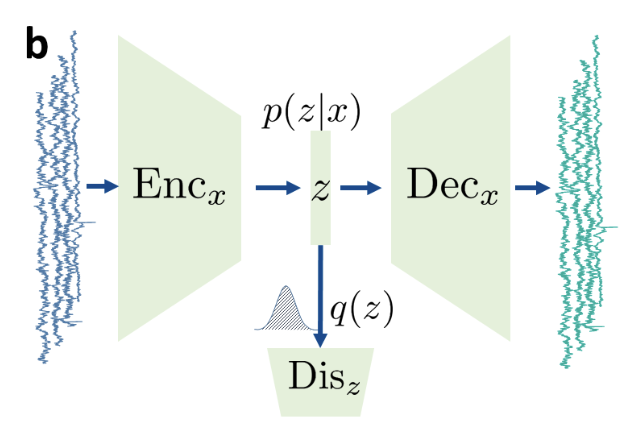
Epileptogenesis anomaly detection figure

Diagnosing Epileptogenesis with Deep Anomaly Detection

Used data from a rodent epilepsy model to show the feasibility of an unsupervised deep anomaly detection framework using adversarial autoencoders to detect subtle changes in brain electrical activity.

  • Python
  • TensorFlow
  • iEEG
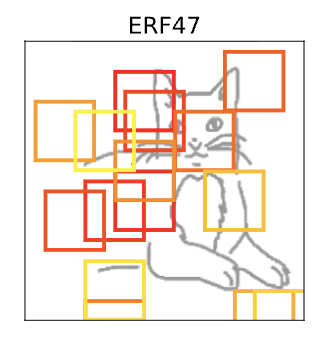
Feature-scrambling in CNNs figure

Spatial Relations and Feature-Scrambling in CNNs

Developed a feature-scrambling approach to investigate the granularity of features used by CNNs for object recognition and whether they encode spatial relations among features.

  • Python
  • TensorFlow
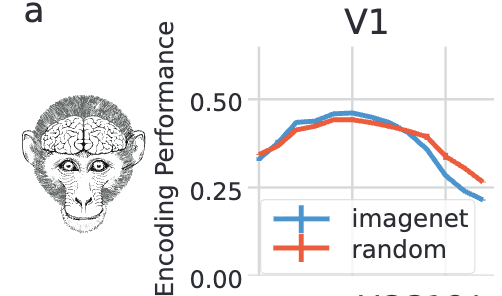
Random-weight CNN fMRI prediction figure

Predicting Neural Responses with Random-Weight CNNs

Evaluated how well untrained and trained CNNs predict neural activity across the visual cortex in humans and monkeys, varying architectural components.

  • Python
  • TensorFlow
  • fMRI
  • Electrophysiology
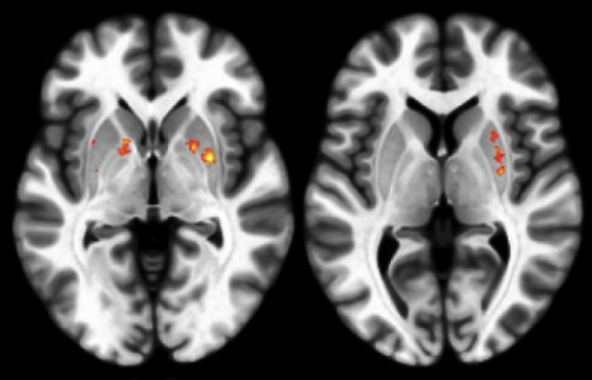
7T fMRI motor learning figure

Investigating Motor Learning Circuitry in a 7T Functional Connectivity fMRI Study

Investigated the neural circuitry underlying motor learning utilizing high-resolution 7T functional connectivity fMRI to observe dynamic changes in brain networks.

  • Python
  • fMRI

$ head -n 7 publications.bib

  1. J. Liu, A. Farahat, and M. Vinck, “Representational drift shows same-class acceleration in visual cortex and artificial neural networks,” bioRxiv, 2025. doi:10.1101/2025.11.05.686897
  2. A. Farahat and M. Vinck, “Neural responses in early, but not late, visual cortex are well predicted by random-weight CNNs with sufficient model complexity,” bioRxiv, 2025. doi:10.1101/2025.02.05.636721
  3. A. Voegtle, L. Terzic, A. Farahat, et al., “Ventrointermediate thalamic stimulation improves motor learning in humans,” Communications Biology, vol. 7, no. 1, p. 798, 2024. doi:10.1038/s42003-024-06462-5
  4. A. Farahat, F. Effenberger, and M. Vinck, “A novel feature-scrambling approach reveals the capacity of convolutional neural networks to learn spatial relations,” Neural Networks, vol. 167, pp. 400–414, 2023. doi:10.1016/j.neunet.2023.08.021
  5. L. Terzic, A. Voegtle, A. Farahat, et al., “Deep brain stimulation of the ventrointermediate nucleus of the thalamus to treat essential tremor improves motor sequence learning,” Human Brain Mapping, 2022. doi:10.1002/hbm.25989
  6. A. Farahat, D. Lu, S. Bauer, et al., “Diagnosing epileptogenesis with deep anomaly detection,” Proceedings of the 7th Machine Learning for Healthcare Conference, vol. 182, 2022. PMLR 182:1–18 (pdf)
  7. A. Farahat, C. Reichert, C. M. Sweeney-Reed, and H. Hinrichs, “Convolutional neural networks for decoding of covert attention focus and saliency maps for EEG feature visualization,” Journal of Neural Engineering, vol. 16, no. 6, 2019. doi:10.1088/1741-2552/ab3bb4

$ cat schools.txt >> education.log